The Communion of Giving Thanks

Whom should I thank?

The question is normally a matter of polite acknowledgement. A gift was given and received. Who gave it? Whom should I thank?

It is inherently the nature of giving thanks that thanks must be given to someone. I cannot give thanks to nothing or no one. As such, the giving of thanks is an act of communion on one level or another.

Fr. Alexander Schmemann, in the last sermon of his life, said, “Everyone capable of thanksgiving is capable of salvation and eternal joy.” I would expand that and say as well, that everyone capable of thanksgiving is capable of becoming human – for the fullness of our humanity is found primarily in communion. And the communion of thanksgiving is perhaps communion at its deepest level.

The prominent place of thanksgiving within the life of the Old Testament seems strangely obscured by most Christian treatments. The system of sacrifice is often misunderstood. The offering of bulls and goats is too often interpreted as a system of payments to an angry God. It is said that our sins have created a debt and deserved guilt. What is owed to God must be paid. But this very treatment of sacrifice is condemned within the Old Testament itself.

I know all the birds of the mountains, And the wild beasts of the field are Mine. If I were hungry, I would not tell you; For the world is Mine, and all its fullness. Will I eat the flesh of bulls, or drink the blood of goats? Offer to God thanksgiving, and pay your vows to the Most High. (Ps. 50:11-14)

The offering given to God is given in thanksgiving or it is useless.

It is quite accurate to view the whole of the life given to ancient Israel as an economy of thanksgiving. The system of the tithe, giving to God a tenth of possessions, is not a system of payments, “rent” given to a heavenly landlord. It is an offering of thanks, an act of communion, sharing with God the very life of the land itself. God and Israel had a communion in the land – something which truly makes it the land of promise.

The system of the Sabbath, when rightly observed, has the same character. The Sabbath Day represents God’s time, set aside from labor. Acquisition stops. Time itself becomes an act of thanksgiving. The more radical practice of the Sabbath, when an entire year (the seventh year) is set aside, demonstrates how profound the nature of this communion was intended to be. Debts were cancelled in the seventh year. We set others free from their bonds because God has set us free from ours. Former slaves should not create new slaves – it would be an act that negates the giving of thanks.

It seems to me not surprising that the penal substitution theory of the atonement has had such a cultural popularity over the centuries. It became at home in a penal culture – one of debts and punishments. The good, the industrious, the diligent and the frugal, prosper and reign. The sluggard, the weak, and the slothful fall ever further into poverty, driven by their own sin. There are many things that ameliorate this model in modern culture, but it remains at the structural heart of our lives.

The truth of the atonement, Christ’s death and resurrection, does not have a place within such a structure. His death is not a payment within a world of payments – an ultimate sacrifice that we could not afford. It is rather the trampling down of the whole world of payments, demolishing the greatest debt of all: death. The sacrifice of Christ is not like the blood of bulls and goats, only human. It is Life poured out on death, thanksgiving triumphing over necessity. Every act of thanksgiving is a communion in the death and resurrection of Christ. It is for that reason that the thankful are capable of salvation – for the giving of thanks makes manifest the true fundamental shape of salvation.

All of this is the reason that from the earliest times, the offering of Christ’s Body and Blood has been known as the Eucharist (“thanksgiving“). It is the Thanksgiving. Were this not so, the Church would have named this most central act of its life something else: the Lord’s Supper or Holy Communion. These are later titles given in an effort to distinguish Protestant worship from Catholic. The word Eucharist is returning to common usage, however. It will be truly significant when the Eucharist (thanksgiving) returns to Christians as a way of life.

The stuff of our daily lives should have more kinship with Old Testament sabbath-thought than with the theories of Adam Smith, Milton Friedman, Maynard Keynes and the like. For when we work for some reason apart from the giving of thanks, we labor as slaves, bound to whatever it is that we perceive as necessary. Christ would free us from such bondage:

Now if God so clothes the grass of the field, which today is, and tomorrow is thrown into the oven, will He not much more clothe you, O you of little faith? Therefore do not worry, saying,’What shall we eat?’ or’What shall we drink?’ or’What shall we wear?’ For after all these things the Gentiles seek. For your heavenly Father knows that you need all these things. But seek first the kingdom of God and His righteousness, and all these things shall be added to you. (Mat 6:30-33)

This is not a commandment from Christ to cease working. But it is a commandment to work rightly.  Our labor is right and good when it is done in communion with God, and this is done primarily in the giving of thanks. The heart of thanksgiving precludes the sense of entitlement – for who gives thanks if what he has was something to which he was entitled? My work, my cleverness, my investments do not give me claim to wealth. For if they give me claim to wealth, then why should I be grateful for what I have?

Rather, Christ gives us everything: “All things come of Thee, O Lord, and of Thine own have we given Thee.” And, “Thine own of Thine own we offer unto Thee, on behalf of all and for all.” If all that I have is a gift for which I give thanks, a means of communion with God, then why should I begrudge sharing it with anyone? Indeed, the act of sharing is itself a primary and inherent part of giving thanks. We give to others because what we have has been given to us. Like Israel, we have communion with all those who are strangers to the goods of this world, for we ourselves once were strangers:

Also you shall not oppress a stranger, for you know the heart of a stranger, because you were strangers in the land of Egypt. (Exo 23:9)

The giving of thanks is not a moral activity: like communion, it is a mode of existence. There is no Christianity that does not include the giving of alms. Sharing belongs to the ontology of the faith.

But do not forget to do good and to share, for with such sacrifices God is well pleased. (Heb 13:16)

Glory to God for all things!

Photo: A Christmas meal at Oașa Monastery in Romania. 
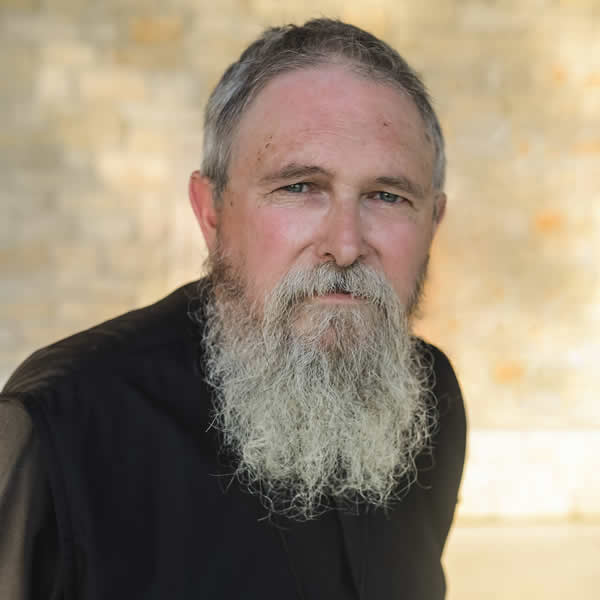
About Fr. Stephen Freeman

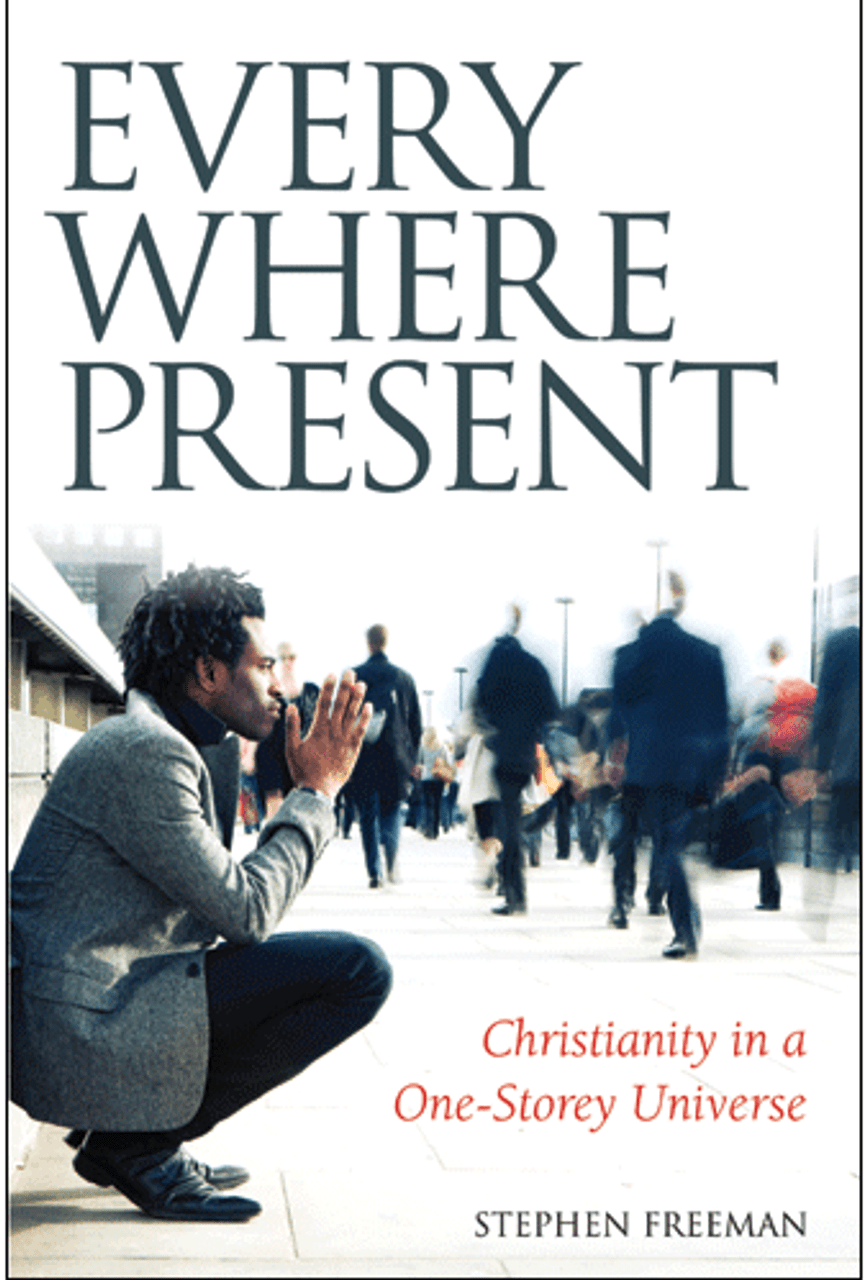
Fr. Stephen is a retired Archpriest of the Orthodox Church in America. He is also author of Everywhere Present: Christianity in a One-Storey Universe, and Face to Face: Knowing God Beyond Our Shame, as well as the Glory to God podcast series on Ancient Faith Radio.


Posted

in

by

Comments

26 responses to “The Communion of Giving Thanks”

  1. Margaret Avatar
    Margaret

    Well said and a blessing to read this, thank you Fr. Stephen! Glory to God for All Things!

  2. Fr. Stephen Avatar

    Margaret,
    Thank you! May your week be blessed!

  3. Susan Cushman Avatar

    Beautiful! Blessed Thanksgiving week to your family!

  4. Dino Avatar
    Dino

    Thank you Father, your words calls us back from the heartless ‘logic of debt’ (and entitlement) into the warm freedom of the Eucharistic life, helping us to recognize the world as sacrament, our neighbour as life, and our heart as the altar upon which to sing Glory to God for all things.

  5. Matthew Avatar
    Matthew

    How is Christ’s pouring out of blood an act of thanksgiving on His part?

  6. Fr. Stephen Avatar

    Thank you, Dino! Amen!

  7. Fr. Stephen Avatar

    Matthew,
    “All things come from Thee, O Lord, and of Thine own have we given Thee…” (1Chron. 29:14) The gift of life (which is inherently part of what it means to be human – our life is gifted to us) is offered back to God. It is an act of thanksgiving. “Father, into Your hands I commit my spirit…” it is a giving…

  8. Matthew Avatar
    Matthew

    Thanks Fr. Stephen.

  9. Ook Avatar
    Ook

    About 40 years ago I read a lot of Joseph Campbell, who said sacrifice represented the necessity of letting go of the ego and personal attachments to be spiritually “reborn”, on both a personal and a societal level. As I recall, he argued that this kind of sacrifice is still quite common, indeed, necessary, but that modern society doesn’t have the symbolic understanding that makes it into a sacred, rather than a resentful act.

  10. Fr. Stephen Avatar

    Ook,
    Campbell was pretty much dominated by Jungian psychology – which, though it spoke of psychological depths, did not/does not believe in God (except as an aspect of consciousness). I’m always cautious around it, or around those who are coming from a position of “depth psychology” in that they will frequently use or borrow language from Eastern Christian teaching, but actually mean something else. Also, I don’t think they actually understand what they are saying when using our vocabulary.

    But, I was not a big Campbell reader – I read a fair amount of Jung when I was in college (Campbell’s stuff came out later).

  11. Ook Avatar
    Ook

    Thank you Father,
    Indeed, Campbell was a myth-maker for the myth-less. Personally, too many dragons and virgins for my taste.
    However, it’s interesting that he recognized the eclipse of the Eucharistic/sacrificial and its effects, even though he could only see a universal psychological pattern.

  12. Andrew Avatar
    Andrew

    Something St. Paul said caught my eye recently and, I think, echoes what you’ve written here Father:

    “Let the thief no longer steal, but rather let him labor, doing honest work with his own hands, so that he may have something to share with anyone in need.”

    Working and earning as you’re able, not for bigger houses or nicer things, but that you “may have something to share with anyone in need.” Even the aim of our individual endeavors in the workforce should have as their aim communion with, and service to, others. Thank you Father.

  13. Fr. Stephen Avatar

    Andrew,
    It’s a sweet verse. It was a memory verse for me long ago (in my late teens). A treasure for all time.

  14. Matthew Avatar
    Matthew

    Fr. Stephen said:

    ““All things come from Thee, O Lord, and of Thine own have we given Thee…” (1Chron. 29:14) The gift of life (which is inherently part of what it means to be human – our life is gifted to us) is offered back to God. It is an act of thanksgiving. “Father, into Your hands I commit my spirit…” it is a giving…”

    So … Jesus offering Himself – His very life – back to God on Calvary is an act of thanksgiving. I assume, then, that when the bread and wine become the body and blood of Jesus – that offering is also one of thanksgiving to God – hence the name Eucharist?

    What was Jesus really thanking God for? That He was able to complete His task of fulfilling the will of His Father?

  15. Fr. Stephen Avatar

    Matthew,
    The giving of thanks is not always “for” something – but stands on its own – it is the voice of love. Somehow, it seems to me, that when the giving of thanks becomes transactional (“you give me this and I give you that”) it is diminished. Of course, in the giving of thanks, we can name any and everything that we have received – all things – but, God does not create a debt within us in His gifting to us. “Freely you have received, freely give.” Our act of thanksgiving, at its highest, is a free offering – an offering to God that itself is a free gift. It is not a payment.

    I hope that helps.

  16. Matthew Avatar
    Matthew

    It does help.

    I still have so much to learn. I am still shedding old theological and spiritual skin.

    Thanks.

  17. Margaret Avatar
    Margaret

    Dear Fr. Stephen, Thank you for this response in your comments this Thanksgiving Day 2025! “…Of course, in the giving of thanks, we can name any and everything that we have received – all things – but, God does not create a debt within us in His gifting to us. “Freely you have received, freely give.” Our act of thanksgiving, at its highest, is a free offering – an offering to God that itself is a free gift. It is not a payment….”
    I appreciate your encouragement more than I can put into words and I thank God for you and pray you and yours enjoy All His Blessings!

  18. Kenneth Avatar
    Kenneth

    Happy Thanksgiving, Fr. Stephen and everyone!

    Fr. Stephen, is your patron saint the first martyr St. Stephen? Thank you for hosting this blog and for your teaching and writing. Good grant you many years!

  19. Fr. Stephen Avatar

    Kenneth,
    He is indeed my patron saint.

  20. Kenneth Avatar
    Kenneth

    This morning I read this wonderful meditation on St. Stephen from Fr. Thomas Hopko (I had not noticed this particular parallel with Jesus’ words before):

    “We are all made to be living temples of God. We are all created to be dwelling places of His glory. We are all fashioned in His image and likeness to be abodes of His presence.

    The first Christian martyr, the protodeacon Stephen whose memory is celebrated on the third day of Christmas, was killed for proclaiming this marvel when he bore witness that “the Most High does not dwell in houses made with hands.”

    For this, like Jesus Himself, he was accused of planning the destruction of the earthly temple at Jerusalem (Acts 7.48; 6.14). The apostle Paul proclaims this same doctrine clearly and without equivocation when he writes to the Corinthians and to us that “we are God’s fellow workers; you are God’s field, God’s building” (1 Cor. 3.9).”

    +Protopresbyter Thomas Hopko: The Winter Pascha

  21. Fr. Stephen Avatar

    Kenneth,
    Thank you!

  22. Jenny Avatar
    Jenny

    Father,

    I have reached this place in The Enlargement of the Heart:

    “Yet, there is another way, for people living in the world: to keep thanking God continually, thus: ‘I thank Thee, O Lord, for all the things that Thou hast done for me’, and so on, adding at the end, ‘… though I am unworthy.’ This brings the same result, the same state. Psychologically, it is more acceptable and has the same effect, because thanking God continually intercedes for our weakness before Him, makes up for our weakness”

    Excerpt From
    The Enlargement of the Heart
    Archimandrite Zacharias (Zacharou)
    https://books.apple.com/us/book/the-enlargement-of-the-heart/id1489518567
    This material may be protected by copyright.

    I cannot explain very well what it has been like to begin this practice. The first day I tried it, I was full of joy all day long. It’s like having two guardrails- one, the thankfulness, the other, the acknowledgment that one is not worthy of the gift. The guardrails keep one’s mind and heart always on the Lord and His goodness.

    I am not so much troubled by anxious thoughts because of this practice. Though I have earned nothing, everything has been given. Though I am not worthy to do anything for the Lord, still, work has been given for which I can thank Him. One can even say this for loving Him- “Thank You that I might love You and pray to You, though I am not worthy.”

    It’s so beautiful, full of peace and joy because of His goodness.

  23. Fr. Stephen Avatar

    Jenny,
    It is such a sweet book – and that is a particularly sweet passage. Thanks for sharing it!

  24. Dee of Sts Herman and Olga Avatar
    Dee of Sts Herman and Olga

    Jenny,
    Thank you for your lovely heartfelt comment. You made my day.

    In Christ,
    Dee

  25. Jenny Avatar
    Jenny

    Father,

    I received your book and I am finishing chapter two. I will not embarrass you by sharing excerpts of your own book with you. 🙂

    However, I was fascinated to learn that babies of all cultures show shame embarrassment as an interruption of being excited or happy, and that healthy shame indicates the presence of boundaries that can be so subtle that we were unaware of them.

    But what I loved the most was when you talk about Isaiah seeing himself when he sees our holy God, but that this is not toxic shame, because God is not condemning him for his shortcomings. Instead, God heals.

    One of my favorite verses is: “The fear of the Lord is clean, enduring forever.”

    And these: “Who can understand his errors?
Cleanse me from secret faults.
    Keep back Your servant also from presumptuous sins;
Let them not have dominion over me.
Then I shall be blameless,
And I shall be innocent of [a]great transgression.”
    (Psalm 19:12-13)

    Often, these two passages go together in my mind, because I feel perhaps that it is the enduringly clean fear of God that helps one find the things that we hide even from ourselves, that could hurt us if they stay in the dark.

    Once the Lord had healed most of my trauma and restored my soul, I began to love and to want this cleansing fear which is like light from our Holy God that shines all the way through.

    Because He never does condemn or shame when the light shows up all the ways I have missed the mark- the mark being the perfection of the Lord Jesus.

    As we know, He is absolutely righteous, perfect and upright in all His ways. His heart is always pure, His thoughts are perfect, His motives are holy. There is no corruption or shadow or bent place in Him.

    And yet for all that, His heart is overflowing with tender mercies and compassion. Whenever He has allowed me to be in this light of His, my first instinct is always to be on my face before Him, crying out to be forgiven.

    Each time, in almost the same moment that I am asking for it, He is meeting me with forgiveness pouring out of His heart, in a manner of speaking.

    This movement of deep compassion on His part always makes me think of this verse:

    The Lord ·wants [is waiting] to ·show his mercy [be gracious] to you.
    He ·wants to rise and [or is exalted and wants to] ·comfort [show compassion to] you.
The Lord is a ·fair [just] God,
    and everyone who waits for ·his help [L him] will be ·happy [blessed].
    (Isaiah 30:18 EXB)

    It does seem just like that- just as though He is already rising up to come help as soon as He hears us call out to Him.

    When I think about shame and the Lord, I often think about the Samaritan woman at well. In her case, the Lord put Himself in a position of need. He asked her for water.

    When Jesus was first getting me to trust Him, He had the same approach. He used this verse: “I have stretched out My hands all day long to a rebellious people…” I could see this vividly- the Lord stretching His hands out with longing, being ignored and brushed aside, and having His heart broken.

    And of course, He says this: “O Jerusalem, Jerusalem, the one who kills the prophets and stones those who are sent to her! How often I wanted to gather your children together, as a hen gathers her chicks under her wings, but you were not willing!”

    This broke my heart. I could not understand how anyone could walk by God when His hands are outstretched and His heart is breaking. Anyway, I could not. And I could dare to do this because He stooped so low in humility to show me His heart.

    I wish I could have read your book much earlier on in my walk with the Lord! It would have helped me understand so much of what He was trying to show me. But I’m very grateful to read it now.

  26. Fr. Stephen Avatar

    Jenny,
    Thank you, ever so much! May the Lord continue to bless your reading!

Leave a Reply

Your email address will not be published. Required fields are marked *


Subscribe to blog via email

Support the work

Your generous support for Glory to God for All Things will help maintain and expand the work of Fr. Stephen. This ministry continues to grow and your help is important. Thank you for your prayers and encouragement!


Latest Comments

  1. This is one of the ways my children have been a witness to myself, they undoubtedly see things with purer…


Read my books

Everywhere Present by Stephen Freeman

Listen to my podcast


Categories


Archives